What the researchers did
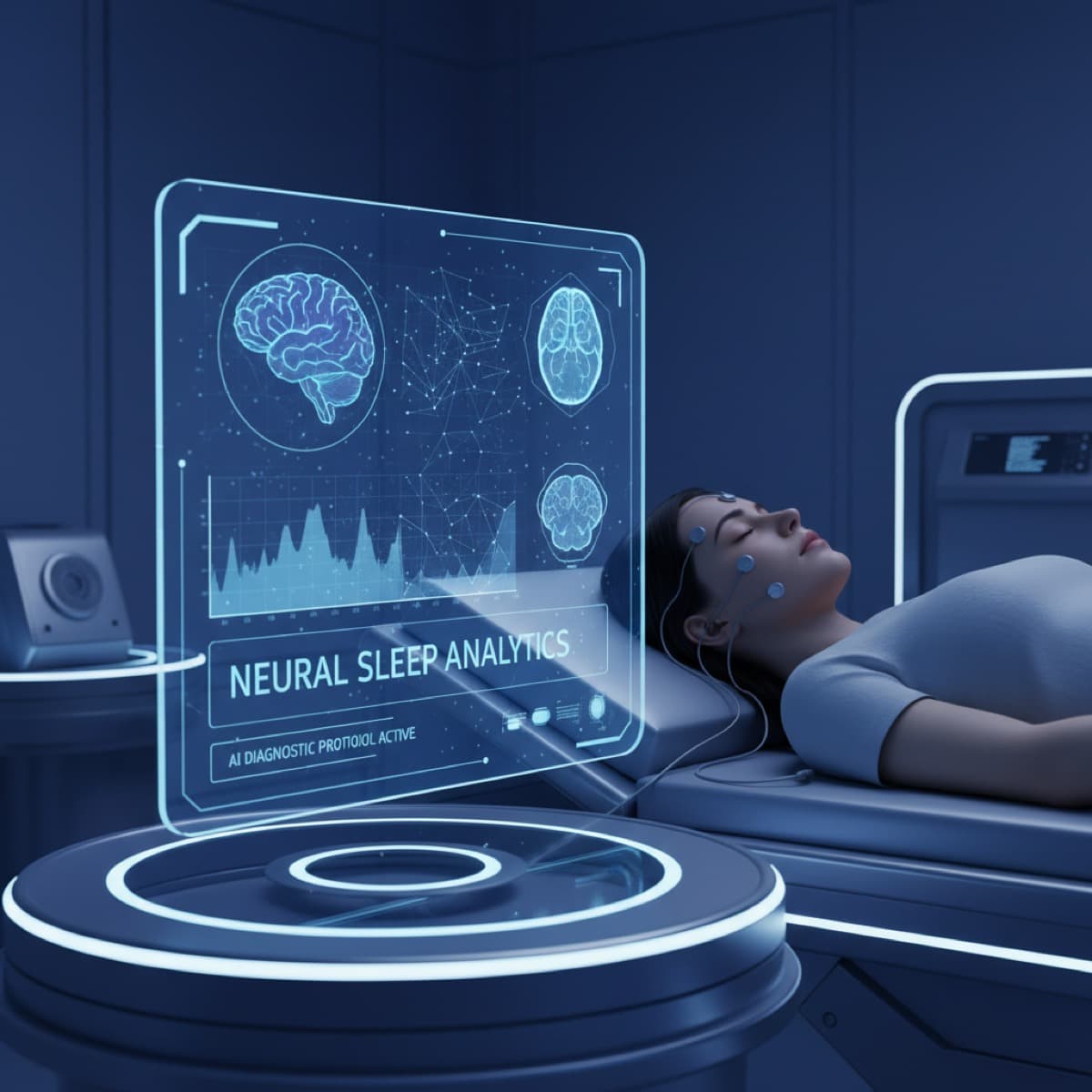
Researchers at Stanford University trained an artificial-intelligence model called SleepFM on a very large number of polysomnography recordings — the reference examination that measures brain activity, breathing, heart rhythm and movement across a full night.
By analysing these signals, the model picks up subtle patterns that are hard for the human eye to see in a conventional reading of the trace.
An early warning signal
According to this work, those patterns are associated with the risk of developing more than a hundred conditions: cancers, cardiovascular disease, psychiatric and neurological disorders.
In some cases the signal appears years before the clinical diagnosis is made.
What it changes — and what it doesn't
This is research work, not a tool available in consultation. No model of this kind is currently used to make a diagnosis, in France or anywhere else.
It does, however, confirm what we see every day: one night of recording says a great deal about general health, well beyond sleep alone. That is also why polysomnography remains central to our practice.
This article is provided for information only and does not replace medical advice. For any question about your own situation, talk to your doctor.